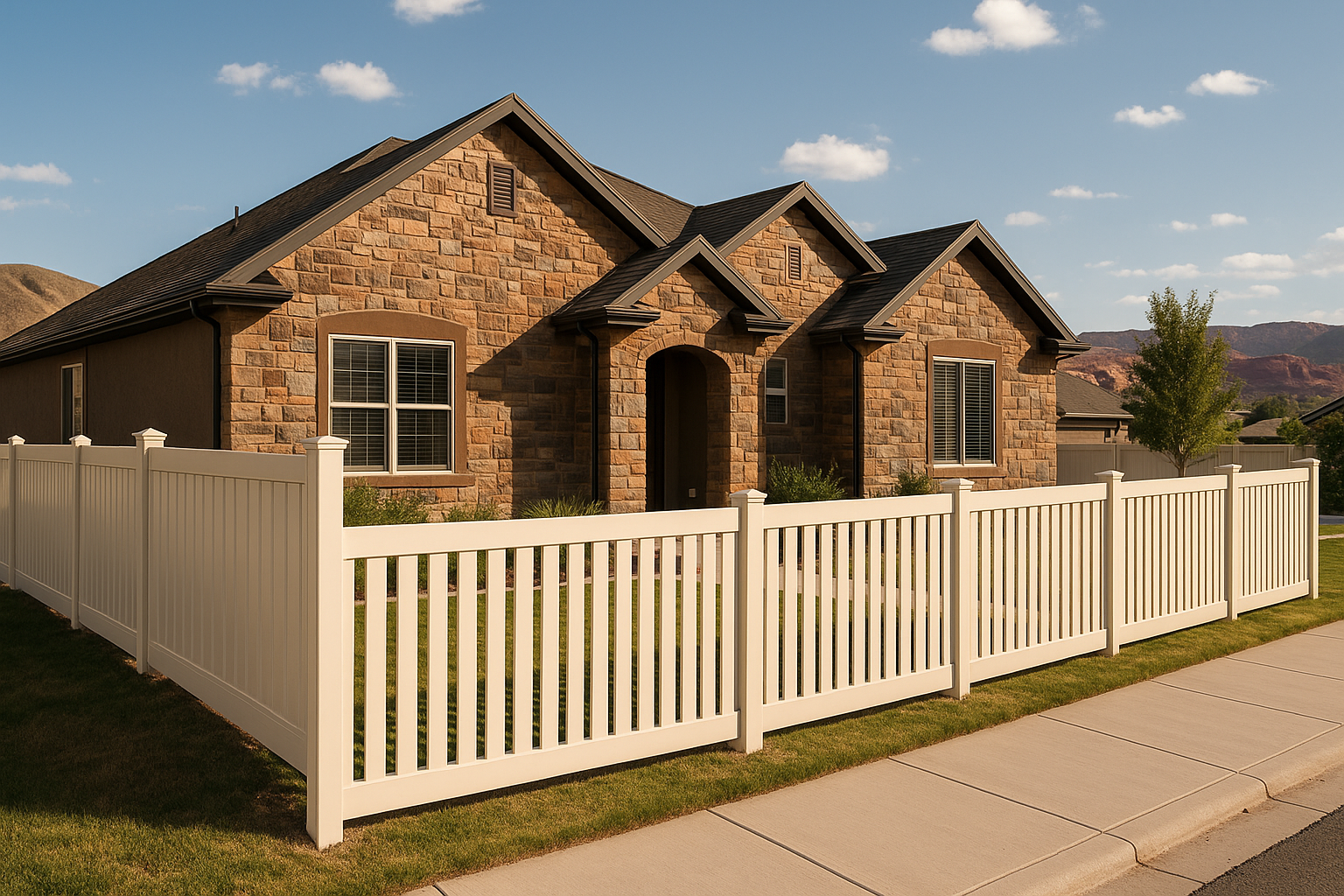
Let’s be real for a second—nobody wakes up on a Saturday morning, looks at their bank account, and thinks, “I can’t wait to spend a chunk of change on property boundaries today.” But then you look outside, see the neighbor’s dog doing business on your lawn again, or maybe you just want a little privacy while you barbecue, and suddenly, that investment starts looking a whole lot more attractive. It’s a big decision, though, and navigating the costs of a Vinyl Fence installation in Cache Valley takes a bit more than just guessing a number.
So, Why Are We Talking About Vinyl?
You know what? There’s a reason you see so much white vinyl fencing driving around Logan. It’s not just because it looks crisp against the green grass or the snow-capped mountains in the winter. It’s about durability.
Here’s the thing about living in Northern Utah: the weather is… enthusiastic. We get baking sun in July and deep freezes in January. Wood fences? They struggle here. They warp, they rot, and they demand you spend your summer weekends sanding and staining them. Vinyl fencing, or PVC as the industry folks call it, is basically the “set it and forget it” option of the fencing world.
But that convenience comes with a higher upfront price tag compared to a standard cedar fence. That’s usually where the sticker shock happens. However, when you start breaking down the lifecycle costs—that is, how much the fence costs you over ten or twenty years—vinyl often wins by a landslide. You aren’t buying stain, you aren’t replacing rotted posts, and you certainly aren’t paying someone to pressure wash it every spring. A garden hose usually does the trick.
Measuring Up: Where the Budget Begins
Before you can figure out how to pay for it, you need to know what “it” actually costs. And honestly, this is where most homeowners get tripped up. It’s easy to eyeball a yard and say, “Eh, looks like 100 feet.” But looking like 100 feet and being 100 feet are two very different financial realities.
Linear footage is the primary driver of your cost.
To get a rough idea before calling in the pros, grab a tape measure (or a long reel tape if you have one) and walk the perimeter. Don’t just measure straight lines, though. Think about where you want the fence to start and stop. Do you want it flush with the back corner of the house? Does it need to encompass the side yard to hide the AC unit?
Once you have that total linear footage number, you can start doing some napkin math. But remember, the material cost is just one piece of the pie.
The “Hidden” Costs That Sneak Up on You
If fencing were just about buying panels and sticking them in the dirt, everyone would have a perfect perimeter. But construction—even fence construction—is never that linear. When we put together a quote at Logan Fence Company, we look at variables that most people don’t think about until the bill comes due.
The Terrain Factor
Have you looked at your yard lately? Really looked at it? Cache Valley isn’t exactly flat. If your property has a slope, we can’t just slap a flat panel on it and call it a day. We have to “rack” the fence (follow the slope) or “step” it (like stairs). Stepping a fence often requires taller posts or custom cuts, which impacts the labor cost.
The Gate Debate
Gates are expensive. I don’t say that to scare you, but a gate is a moving part with hardware, hinges, and structural reinforcements. A standard walk gate is one price; a double drive gate so you can park the RV in the backyard is another beast entirely. When planning your budget, ask yourself: How many ways do I really need to get in and out of this yard?
The Demolition Derby
Do you already have a fence? That old chain-link or rotting wood eyesore has to go somewhere, and it usually isn’t the trash can. Fence removal and disposal fees are standard. It takes labor to rip it out and dump fees to get rid of it. If you’re trying to save money, this is one area where a little sweat equity on your part (tearing it down yourself) could shave some dollars off the top.
Let’s Talk Cash Flow and Financing
Okay, so you have a rough number in your head. Now, how do you pay for it without emptying your emergency fund?
This is where financial planning gets personal. For some, writing a check is the way to go. But for many families in Logan, keeping cash liquid is important, especially with the way the economy has been fluctuating.
Home Equity Lines of Credit (HELOC)
Since a fence is a semi-permanent addition that usually increases property value, using home equity is a common route. A HELOC acts like a credit card backed by your house. You can draw from it to pay for the fence and pay it back over time. Just be mindful of interest rates; they aren’t as low as they used to be.
0% Interest Credit Cards
If you have good credit, you might find a card offering an introductory 0% APR for 12 to 18 months. If you can discipline yourself to pay off the balance before that promotional period ends, this is essentially a free loan. It’s a smart play, but it’s risky if you miss the deadline and get hit with back interest.
Contractor Financing
Sometimes, we (or other contractors) have relationships with lenders to offer financing directly. It simplifies things because you’re dealing with the project and the payment in one place. It’s worth asking about during your consultation.
Here is a quick breakdown of how these methods compare:
| Payment Method | Pros | Cons | Best For |
|---|---|---|---|
| Cash / Savings | No interest, immediate ownership. | Depletes liquid assets. | Small jobs or robust savings. |
| HELOC | Lower interest rates than unsecured loans. | Uses home as collateral. | Large projects, long-term repayment. |
| Credit Card | Points/rewards, potential 0% promo. | High interest if not paid fast. | those with strict repayment discipline. |
The DIY Temptation: Is It Actually Cheaper?
I get it. You watch a few videos, you see the guys making it look easy, and you think, “I can save the labor cost!”
And theoretically? You can. But let me ask you a rhetorical question: How much is your weekend worth?
Installing a vinyl fence isn’t just digging holes. It’s digging holes in Utah soil. If you’ve ever tried to dig a post hole in Logan, you know we have rocks. Lots of them. Sometimes we have clay that feels like concrete.
Professionals have augers, rock bars, and crews. What takes a pro crew two days might take a homeowner three or four weekends. And if you set a post crooked? Or if you don’t use enough concrete and the frost heave pushes the post up next winter? Fixing a bad install is always more expensive than doing it right the first time.
Plus, professional installation usually comes with a warranty on the labor. If you do it yourself and a windstorm blows a panel out because the rails weren’t seated right, that’s on you.
Understanding the “Price Per Foot” Myth
You’ll hear this term thrown around a lot. “What’s your price per foot?” It’s a natural question, but it’s kind of like asking a car dealer, “What’s the price per pound of this truck?”
It gives you a baseline, sure. But the price per foot changes based on the style of vinyl.
- Privacy Fencing: Solid panels, uses the most material.
- Picket Fencing: Open slats, uses less material, usually cheaper.
- Ranch Rail: Two, three, or four rails. Great for large properties, much lower cost per foot.
If your budget is tight, you might consider mixing styles. Maybe you do a solid privacy fence on the sides where the neighbors are close, but switch to a ranch rail with wire mesh along the back property line to keep the view of the mountains open. It keeps the dog in, keeps the cost down, and actually looks pretty custom and high-end.
Timing Your Installation
Believe it or not, when you buy can impact your budget.
Spring and early summer are the “mad rush” seasons in the fencing industry. Everyone looks at their yard in April and wants a fence by May. Supply and demand kick in. Lead times get longer, and sometimes material prices creep up because manufacturers are slammed.
If you plan your installation for late autumn—right before the snow flies—or even during a mild winter spell (yes, we can sometimes dig in winter if the ground isn’t frozen solid), you might find better availability. It’s not a guarantee of a discount, but it definitely gives you more leverage and faster turnaround times.
The Return on Investment (ROI)
Let’s zoom out for a minute. You aren’t just spending money; you’re putting equity into your home. A quality vinyl fence installation is a selling point.
If you ever decide to sell your house, a potential buyer pulls up and sees a pristine, low-maintenance fence. They immediately tick a box in their head: Okay, that’s one big project I don’t have to worry about.
Conversely, if they see a rotting Wood Fence leaning at a 45-degree angle, they see dollar signs and weekends of labor. They might lower their offer.
Think of the fence as a shield for your property value. It defines your boundaries clearly, provides security, and enhances curb appeal. In a family-friendly area like Logan, a fenced yard is almost a requirement for buyers with kids or pets.
Don’t Forget the Rules
Here is a budget killer that people forget: Permits and HOA fines.
Logan City and the surrounding communities in Cache Valley have specific zoning laws regarding fence height and placement. For example, you typically can’t put a 6-foot privacy fence in your front yard; it creates a blind spot for traffic. If you install a fence that violates code, the city can make you tear it down. That is money straight down the drain.
If you live in an HOA, they might have strict rules about color (usually white or tan) and style. Getting fined because you didn’t read the bylaws is a headache you don’t need.
When you hire a professional company like ours, we generally know these rules like the back of our hand. We help keep you compliant so you don’t face penalties later.
Final Thoughts: It’s About Peace of Mind
Financial planning for a fence isn’t the most exciting topic in the world. It’s a lot of math and measuring. But the result? That is exciting.
It’s letting the dog out at 6 AM without having to put a leash on him. It’s having a backyard barbecue without making awkward eye contact with the neighbor. It’s knowing your kids are safe in the yard.
Budgeting properly means no nasty surprises. It means you get exactly the fence you want, installed the right way, without overextending yourself.
Whether you are ready to break ground tomorrow or you are just starting to save up for next year, getting a clear, accurate number is the first step. You don’t have to navigate the slopes, the soil types, and the material options alone.
We’ve been fencing in Logan for a long time. We know the land, we know the weather, and we know how to make a budget work for you.