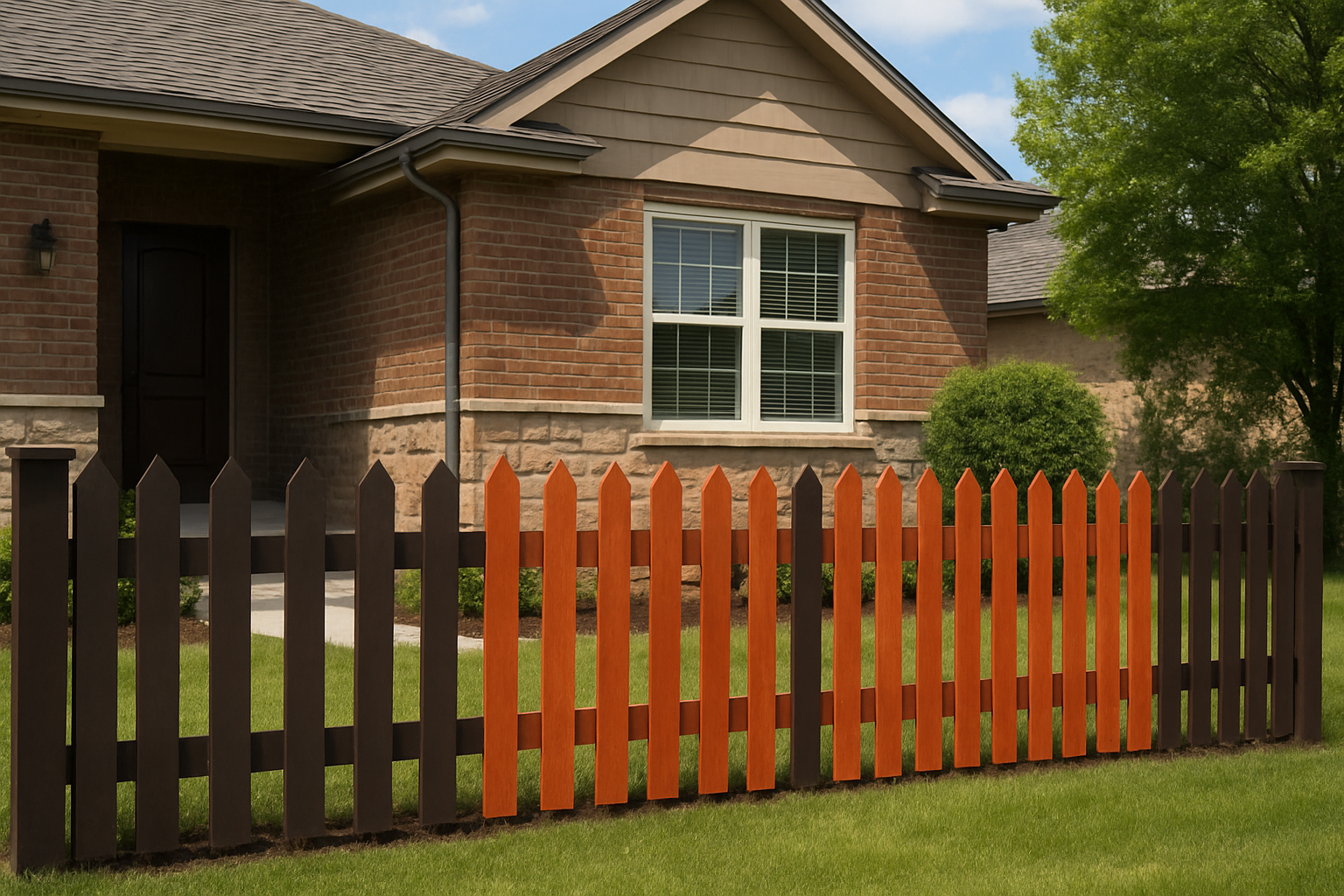
A Wood picket fence is practically an American icon, but honestly, it doesn’t have to be a plain white boundary that just fades into the background. Here in Logan, UT, your fence takes an absolute beating from our heavy snowy winters and blazing high-altitude summers, so why not protect it with a finish that actually adds some real personality to your property? Let’s talk about some fresh, unexpected ways to paint or stain your wood picket fence that will make your neighbors stop and take notes.
Why Are We Still Settling for Basic White?
Don’t get me wrong, a crisp white fence has its place. It’s classic. It’s clean. But you know what? It’s also a little tired.
When you drive around Cache Valley, you see a lot of the exact same properties. Homeowners and local businesses alike get stuck in a visual rut, assuming white paint or a basic clear coat are the only acceptable choices for their perimeters. Here’s the thing: your fence is a massive piece of your landscaping. It’s essentially a giant, continuous canvas wrapping right around your yard or storefront.
Leaving it basic is a total missed opportunity. Instead, bringing in color or deep, rich stains can completely shift the vibe of your exterior. Imagine anchoring a lush green garden with a moody, dark-stained backdrop, making the bright blooms pop. Or picture framing your front porch with a muted sage fence that perfectly complements your home’s trim. It just makes sense to treat your fence like an architectural feature rather than a simple afterthought.
When you get creative with your finishes, you elevate the entire property.
The Wood Matters: Cedar vs. Pine
Before we get too far ahead of ourselves, let me explain something crucial. The actual wood your fence is built from dictates how your finish is going to look. You cannot just slather a beautiful mahogany-toned stain on a cheap piece of pine and expect it to look like a million bucks.
Pine is notoriously splotchy when it takes on liquid. It absorbs moisture unevenly, which leaves dark patches sitting right next to weirdly light spots. If you are staining pine, applying a pre-stain wood conditioner beforehand is absolutely non-negotiable.
Cedar, on the other hand, is a dream material. It has natural tannins and oils that resist rot, making it incredibly popular for wood picket fences around our area. But here is a mild contradiction: those same natural oils that protect the cedar can actually push paint right off the surface. So while the wood is naturally highly durable, it can be unexpectedly finicky to coat. You have to use a dedicated oil-blocking primer first to lock those natural tannins inside the wood. Once that primer is fully dry, your topcoat will adhere beautifully and last for years.
Two-Tone Techniques That Turn Heads
If you really want to shake things up visually, the two-tone method is incredible. It sounds highly technical, but it’s genuinely just using two different colors or finishes on the exact same structure.
- Contrasting Posts and Pickets: Try painting your thick fence posts a solid, dark color—like charcoal or navy—while staining the vertical pickets with a warm natural tone. This framing effect looks highly custom and modern.
- The Shadow Box Effect: If you have an alternating picket style, painting the front-facing boards one shade and the back boards a slightly darker shade creates amazing visual depth.
- Capping it Off: Paint the main body of the fence one uniform color, but stain the top rail a natural wood tone. It gives off a very subtle, high-end craftsman aesthetic.
This approach gracefully mixes the rustic appeal of natural wood grains with the clean lines of modern exterior design. It certainly takes a little extra time with the painter’s tape. But the payoff? Absolutely worth the extra elbow grease.
Stains That Actually Make a Statement
We need to talk about modern stains. Most folks hear “wood stain” and immediately picture that sticky, yellowish-orange deck color from the 1990s. Honestly, stain chemistry has come a remarkably long way since then.
Today, you can find semi-transparent or solid stains in almost any color imaginable. Unlike standard paint, which sits right on top of the wood forming a shell, stains penetrate the microscopic fibers. This matters deeply for us here in Northern Utah. When the heavy snow inevitably piles up against your fence in January, you want a finish that won’t simply peel off in massive sheets when the spring thaw rolls around.
A semi-solid slate-gray stain is gaining major traction right now for residential properties. It allows the natural knotting and undulating grain of the wood to barely peek through, giving you beautiful texture, while still delivering a bold, contemporary color. It’s the perfect bridge between a traditional picket layout and modern architectural trends.
Paint vs. Stain: The Real Breakdown
So, which route should you actually take? People ask us this all the time. Let’s break it down simply so you can make an informed choice for your specific yard.
| Feature | Solid Paint Finish | Penetrating Wood Stain |
|---|---|---|
| Coverage Level | Completely hides all wood grain | Enhances or lightly tints the grain |
| Maintenance | Can crack and peel; requires heavy scraping | Fades naturally over time; much easier to reapply |
| Color Options | Literally infinite | Somewhat limited, mostly earth tones |
Paint gives you that thick, uniform, highly protective shell. It’s brilliant if your fence is a few years old and has some mismatched replacement boards you want to hide. Stain, however, is much more forgiving over the long haul. If a high-quality exterior wood stain starts to weather, it just looks charmingly rustic. If paint weathers, it looks like you completely neglected your household chores.
Colors Inspired by the Cache Valley Landscape
If you want your property to feel deeply connected to the local environment, pull your color inspiration straight from the mountains and valleys around us. Earthy, grounded colors are making a massive comeback for both residential and commercial custom fencing.
- Muted Sage Green: This is hands-down one of the most flattering colors for an outdoor boundary. It blends seamlessly with garden landscaping and looks incredible set against classic brick homes.
- Warm Terracotta: Feeling a bit bold? A rusty, earthy red-orange warms up a yard beautifully, even in the dead of a bleak winter. It brings a surprising touch of desert warmth to our northern cold.
- Midnight Blue: Instead of a stark, heavy black, a deep blackened blue adds major sophistication without feeling overly harsh or imposing. It looks particularly stunning when paired with bright white exterior house trim.
These specific shades feel incredibly intentional. They don’t scream for attention, but they quietly elevate the entire curb appeal of the property.
Timing the Project: Beating the Utah Weather
Let’s talk about the weather for a second. Honestly, finding the perfect weekend to paint outside in our valley is like trying to catch a greased pig. It’s tough. You are constantly battling unexpected rain showers, intense midday sun, and sudden temperature drops.
Paint and stain both require very specific atmospheric conditions to cure properly. If you apply a finish when the wood is sitting in direct, baking sunlight, the liquid dries way too fast. The moisture flashes off before the binders can adhere to the wood fibers, leading to premature peeling.
Conversely, if the temperature drops rapidly overnight, the curing process halts completely. You wake up to a tacky, sticky surface that catches every single piece of blowing dust and pollen in the neighborhood. You really want to aim for a stretch of overcast days where the temperature hovers comfortably between 50 and 80 degrees.
The Unfun Truth About Prep Work
Okay, a quick tangent. You can buy the most expensive, gorgeous gallon of premium stain on the market today, but if you slap it onto a dirty fence, it is going to fail. Period. Preparation is the totally unglamorous secret behind every beautiful, long-lasting fence.
Wood is basically a rigid sponge. As it sits outside, it collects dirt, mildew, bird droppings, and old flaking finishes. Before you even think about opening a can of color, that wood needs to be thoroughly cleaned.
A good wash with a TSP (Trisodium Phosphate) solution is usually step one. It strips away the grime effortlessly. Follow that up with a gentle pressure washing. But be highly careful here—if you use too much pressure, you will permanently splinter the soft wood fibers and ruin your expensive pickets. Use a wide fan tip and keep the wand moving constantly. Once the wood is bone dry, a quick, light sanding knocks down any fuzzy fibers raised by the water.
Do you really have to do all this? Well, yes. Skipping the tedious prep work is like trying to paint directly over dust. It might look passable for about two weeks, but once the elements hit it, the finish will fail. Doing it right the first time saves you a massive, expensive headache next season.
Applying the Finish Like a True Professional
When it finally comes time to get the color onto the wood, please ditch the cheap, disposable chip brushes. Invest in a good quality synthetic bristle brush for water-based acrylics, or natural bristles for oil-based products. The tool you use matters just as much as the product itself.
A lot of fence painting contractors use high-powered airless sprayers. Sprayers are incredibly fast, sure. But if you are tackling this on a breezy Tuesday afternoon, a sprayer is going to send a fine mist of sage green paint right onto your neighbor’s newly washed car. Not a great look.
Using a thick nap roller paired with a brush—a reliable technique called back-brushing—works wonders. You roll the finish on quickly to get the bulk of the liquid onto the wood, then immediately drag a dry brush over it. This action physically pushes the stain or paint deep into the microscopic pores of the wood and smooths out any heavy drips. It’s undeniably a bit of a physical workout, but the results are vastly superior to just slapping it on lazily.
Let’s Bring Your Fence to Life
Your fence is standing out there right now, braving the harsh elements day in and day out. Whether you want to revitalize an old, graying property line or you are looking to install a brand-new custom boundary, the specific finish you choose matters immensely. It protects your hard-earned investment and sets the visual tone for your entire home or business exterior.
You certainly don’t have to tackle this massive project alone, though. If climbing around the yard with a paintbrush doesn’t sound like your ideal weekend, or if you need a robust, beautifully built fence constructed from the ground up, we have your back.
At Logan Fence Company, we know exactly what materials, architectural designs, and durable finishes stand up to our unique local climate while looking fantastic year-round. We are deeply passionate about helping our neighbors build something that genuinely lasts.
Ready to dramatically upgrade your curb appeal?